Matilda Sturley, a Tat Alumni and founder of Legato Studio, asked a handful of experts how they make their rooms tuneful.

For years, I dreamt of owning my home, as many of us do. I wanted to put my stamp on the four walls I owned, to choose the colours and add character to a space that my landlords didn’t restrict. It’s a daydream many of us share that might one day become a reality for some.
That day arrived in March this year, when my husband and I moved into our first flat. It’s one of those traditional Victorian conversions with a long corridor running from the front door to the little terrace garden at the back. Each room sits to the right-hand side in a linear fashion. It's dinky, but all ours.
When we first viewed the flat, I was beyond excited by the chance to transform the space. Having been a lover of interiors for years, I imagined all the possibilities. When we finally moved in, we painted walls, added new carpets and flooring, arranged our furniture, and hung our art. Once we placed the last of our books on the newly hung shelves, we stepped back and realised it was technically done, but why did it not feel finished?
There’s such an art to interior design, and the ability to put together a scheme that is cohesive, interesting and handsome will always astound me. It is such a skill to create a particular feeling, whether of homeliness, decadence or calmness. The professionals get the job done and done well!
Fortunately, many interior designers have various suggestions on how to make a room sing. I have asked a handful of interior aficionados who manage to make rooms holler to share their tips and tricks.
Nicky Haslam, Designer
Always break up the space with as many tall uprights as possible; it makes the room look bigger.

Clare Gaskin, Designer
Our projects are all about telling the story of our clients, and so elements which feel highly personal contribute to developing this. Such details might include furniture that has been in the family, an artwork commissioned by the family or a beautiful ceramic piece bought on holiday.
I think the main advice would be to avoid over-designing. Part of a space feeling finished is it feeling right for the owner. I think there can be a tendency to design every aspect of a room – often, yes, resulting in a lovely space, but it can feel like something is missing or unfinished.
The thing which for me, really completes a room is the owner living in the space and introducing their own things. We often pare back our accessorising, encouraging clients to move in and reminding them that we aren’t going anywhere! And so, once they are back in their home and settled – they can reflect on whether they want a couple of extra cushions, additional artwork or help with finding the perfect vase. Pausing and allowing a space to be habited gives the scheme time to bed, but also the space to be truly used and lived in. That experience can lead to wonderful finishing touches.
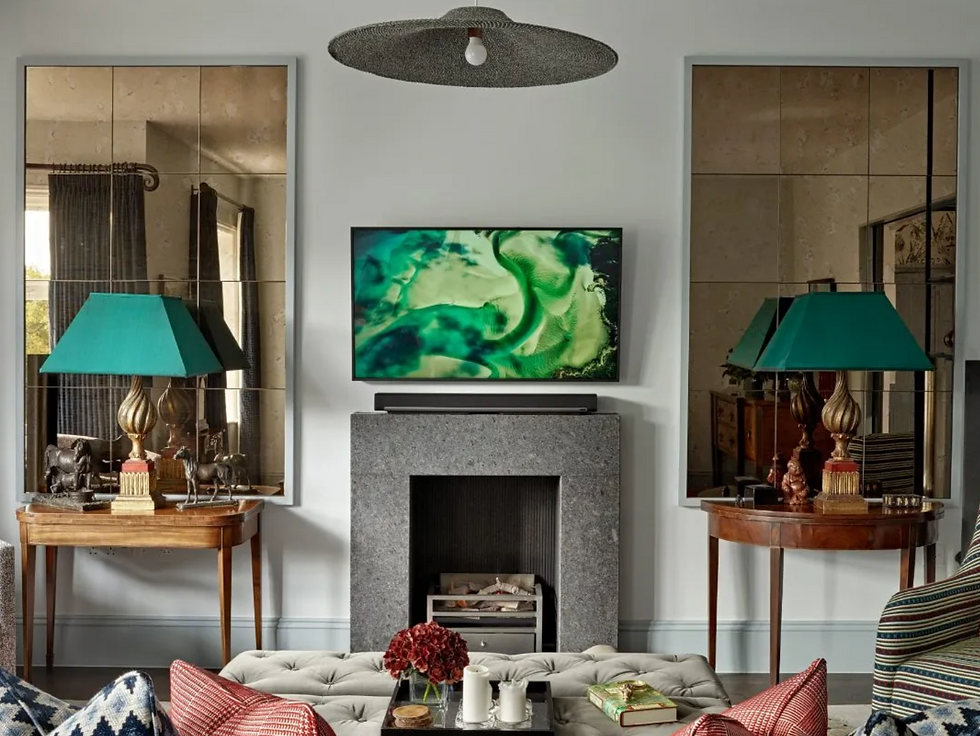
I find a sense of harmony in asymmetry when designing both my home and my tables. It’s all about finding that perfect balance of weight in texture, shape and colour. When the room is balanced, the people in it feel comfortable and at ease, and that’s what makes the room sing.

Adding either a piece of art, a beautiful wall light or candelabra is like adding a piece of jewellery to your outfit. It’s the finishing touch that just makes everything shine. I have a rule to only hang a piece of art in a space where it truly adds something and takes that space to the next level because that is what art is meant to do. It’s the thing that catches your eye, sparks that interest and adds another dimension to your design.
Use the patination on surfaces and objects that have had a previous life as part of your interior scheme. This brings a certain magic and energy into a room. Maybe it is romantic, but I feel that the crumbling texture of an antique daybed, the dents and marks on a reclaimed slate worktop or the patination on an antique table that has had many different lives breathes soul into a room.
Play with contrasts and combine details that wouldn’t traditionally sit together to bring energy into a room. It’s important to have something unexpected in a scheme. Interest can be created by putting an unusual colour or an unexpected style alongside each other.
Wherever possible, add details that have been crafted by hand. It could be something as small as a hand-painted plate or a handmade piece of pottery. The qualities of a surface or form that has been crafted by hand far outweigh anything that has been mass-produced. The human eye is a wonderful thing. We can perceive these subtle differences without even realising it. A room can feel flat and soulless without something that has been created by hand.

Source lovely bedlinen or a special quilt from an antique market. Make your own cushions from any leftover fabric you might have, from designing a headboard to making your own curtains. Use a ticking to back a cushion if you don’t have enough fabric. Ticking as a curtain lining is another winner, as it’s so affordable and is a lovely extra detail.

When possible, we love to work with specialist decorators who are able to give wonderful subtle wall effects which give patina and a feeling of age that we often want to try and bring into interior schemes.