
- May 4, 2025
- 3 min read
Updated: Nov 26, 2025

Garlands & Green Men: May Day in England
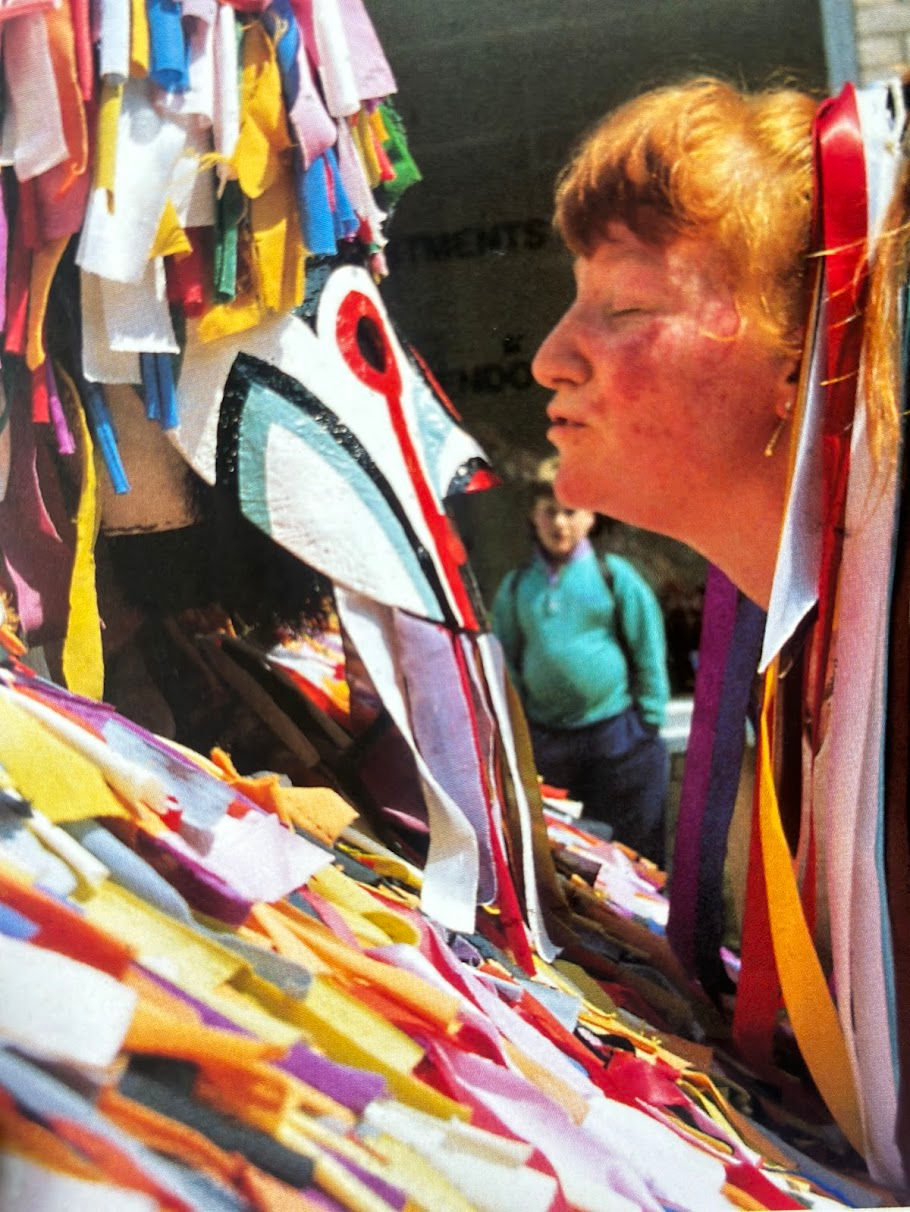
All photographs taken from May Day, The Coming of Spring by Doc Rowe
There’s something quietly touching about May Day. A mix of flowers, folklore, and slightly self-conscious dancing. It marks both the coming of spring and, in many places since the 19th century the achievements of the international labour movement. A day to honour workers and their fight for better rights, while also welcoming the warmer months with maypoles, ribbons, and village greens. What could be better than that, a day for both hope and hard-won dignity, celebrated with dancing and flowers?
We English have always taken a certain pleasure in marking the beginning of things in eccentric, traditional, handmade ways. The first day of May is no exception and for those with a soft spot for rituals involving ribbons, bells, and greenery (surely all of us?), it’s just about the perfect day. Perhaps only bested by the glorious torch-wielding towns of the South of England on fireworks night.

So we start with the maypole. A tall, sometimes slightly teetering pole, crowned with ribbons that children (and the occasional obliging adult) weave around in careful circles, often to the tune of a local brass band or a portable speaker with that terrific tinny quality. It’s the sort of thing that seems ancient,and is, in fact, deeply so. Possibly rooted in pagan fertility rites, now reimagined as a child-friendly and, dare I say it, consistently beautiful spectacle.
Then there’s the May Queen, usually a girl from the local school (or in our village a more senior member of the establishment, both worthy choices), chosen to be the human embodiment of spring. She’s crowned with flowers and wheeled through the village in a cart or paraded down the high street, depending on budget and ambition. Somewhere nearby, her opposite number may lurk - the Green Man, a leafy, folkloric figure of rebirth and mischief, sometimes charming, sometimes terrifying, depending on the mask situation.

If you’re lucky, you’ll encounter a group of Morris dancers clattering down the street in their white shirts, with bells on their shins and handkerchiefs or sticks waving in the air. The dancing is not always elegant, but it is full of heart. This, if you have not experienced it before, can leave you with quite the confusing sensation, confusing in how very much you might find it awkward, while also awakening a deep love for middle-aged men in white, straw hats, and a bountiful amount of ribbons wrapped around shins.

In parts of the country, particularly Hastings and occasionally London, May Day means the return of Jack-in-the-Green, a man entirely concealed in a giant cone of leaves, like a shrub with legs. He’s paraded through the streets as part of a colourful procession, trailed by chimney sweeps, drummers, and general merrymakers. A curious mixture of pagan and Victorian, like so many of our better traditions.
And if you happen to be in Oxford on the morning of May 1st, set your alarm. Before the sun is even up, people gather beneath Magdalen College Tower, where, at 6 a.m., the choir sings the Hymnus Eucharisticus. There are students in black tie and flower crowns, locals clutching coffee, and a general sense of damp reverence. Afterwards, it all dissolves into street music, impromptu jigs, and the occasional jump from Magdalen Bridge into the Cherwell (not recommended).
May Day in England is not slick. It doesn’t rely on branded bunting or viral campaigns. It’s ancient and a little odd, a celebration that survives because it’s stitched into the fabric of certain places: village greens, college towers, pubs with hand-painted signs. It’s kept alive by brave, organised souls who recognise its beauty and are determined to preserve this bizarre, yet deeply heartening, tradition.




Comments